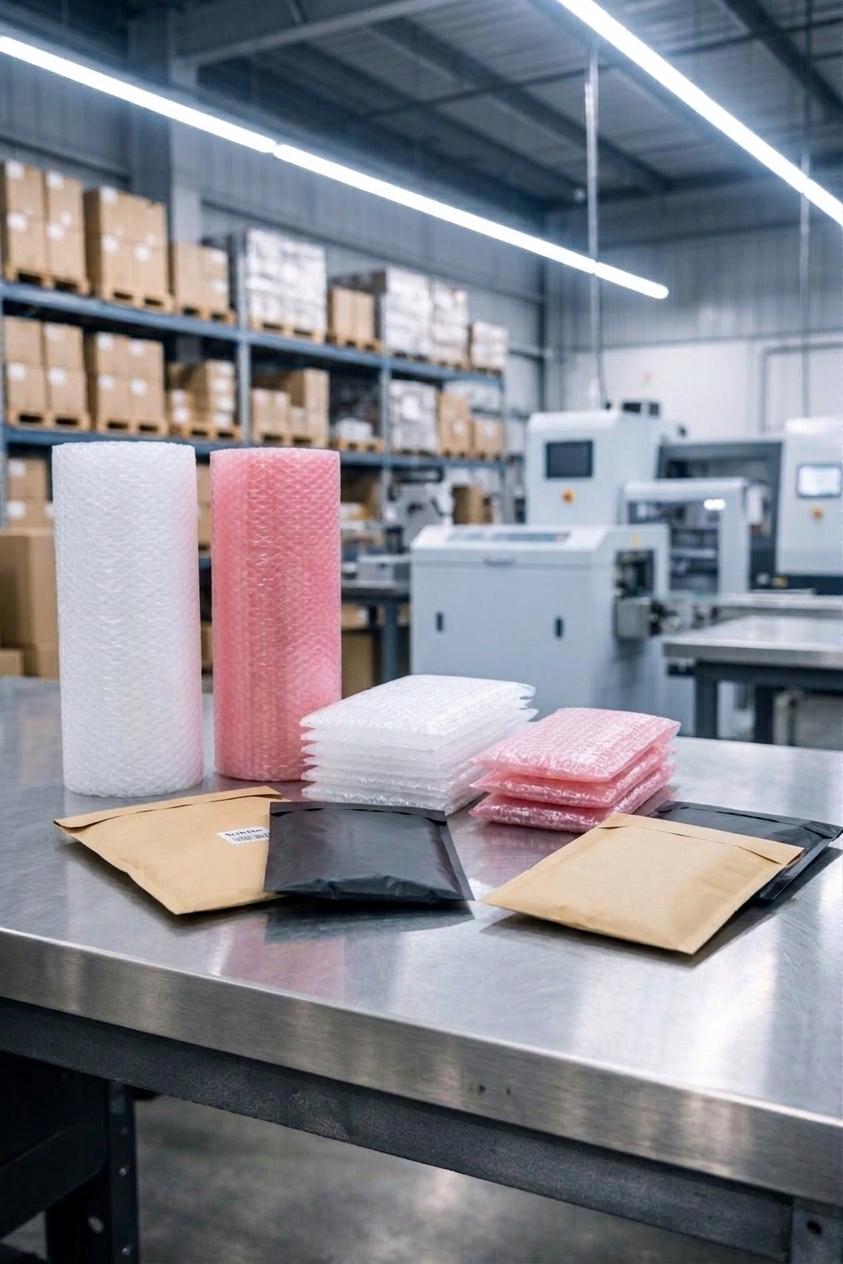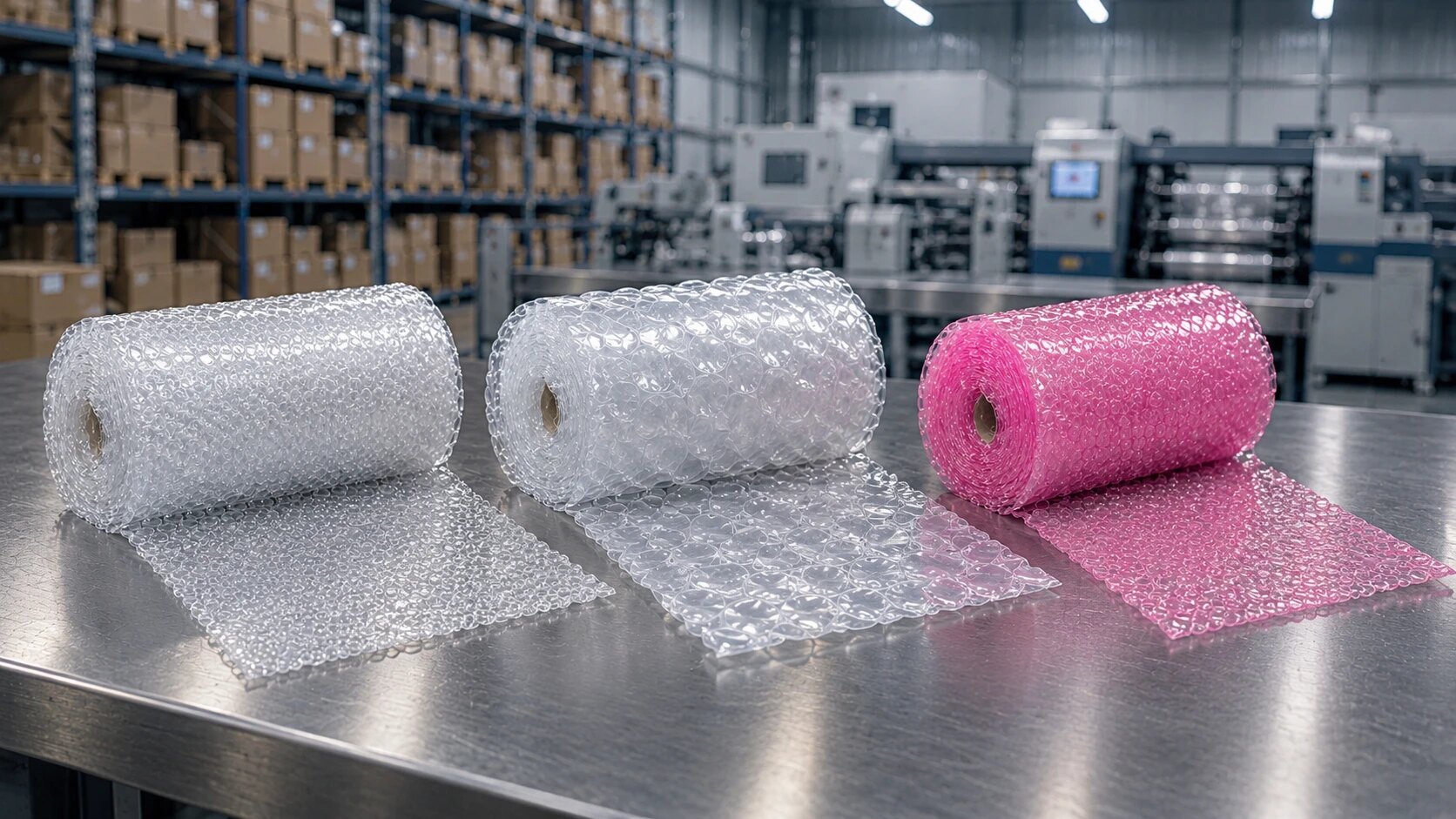
In short: light items need a single layer and regular bubbles. Heavy or fragile items, and long shipments, need double or triple layer. Jumbo bubbles for large items and void fill. Near electronics, the anti-static version.
How many layers: one, two or three
Bubble wrap is built from layers of polyethylene with air bubbles sealed between them. The more layers, the stronger it is and the better it holds up to rough handling. A rule of thumb:
| Suits | Examples | |
|---|---|---|
| Single layer | Light items, light padding and void fill | Books, textiles, inner wrapping |
| Double layer | Most business shipments | Tools, small appliances, glass |
| Triple layer | Heavy items and rough handling | Machine parts, heavy equipment, moves |
Regular or jumbo bubbles
Regular, small bubbles suit small, delicate items: they follow the shape of the item and protect it from scratches and light knocks. Jumbo bubbles are bigger and absorb stronger blows, so they suit large items and filling empty space in a carton.
Anti-static, foil and paper
- Anti-static (pink): for padding near electronic components. It reduces charge build-up, but it does not replace a shielding bag for a sensitive part. The difference is explained in this guide.
- With foil: bubble wrap with an aluminium layer. The foil reflects radiant heat, so it is also used for insulation.
- With paper: bubble wrap with a paper outer layer, when you want a paper surface on the package, for example to write on it.
How to wrap it right
- Several turns. For a fragile item, two or three turns protect better than one.
- Fill the gaps. An item that moves inside the carton breaks even when it is wrapped. Fill what is left with more bubble wrap or jumbo bubbles.
- Protect the corners. Corners and edges take most of the blows, so wrap them more.
- Tape it, in moderation. Enough that the wrapping does not open on the way.
What we offer
We make our own bubble wrap, in every kind: single, double and triple layer, regular and jumbo bubbles, anti-static, and with foil or paper. In any width, and even a single roll. We also have padded envelopes with bubble lining, of every kind and size.