In short: choose by the inside size, not the letter. An A4 document fits G (24×33 cm), A5 fits D (18×26), and for an item with volume, add its thickness to the width and the length.
Why the letter is not enough
Padded envelopes are named by a letter, from A to K, but the letters have no fixed size. With different suppliers the same letter can differ by several centimetres, and some give the outside size while others give the inside size. So compare by the inside size: that is the room the item has inside the envelope.
Our sizes
These are our common sizes. All are inside measurements, width × length in centimetres.
| Letter | Inside size | Fits, for example |
|---|---|---|
| A | 9×16 | Jewelry, cards, small parts |
| B | 12×21 | A phone without a box, cables |
| C | 14×21 | Small boxed products |
| D | 18×26 | An A5 document, a boxed phone |
| E | 22×26 | Wide, low boxes |
| F | 21×33 | Narrow, long items |
| G | 24×33 | An A4 document, a catalogue |
| H | 26×36 | A thick A4 folder |
| J | 30×44 | Folded clothing, large items |
| K | 34×47 | An A3 document, the largest items |
How to choose a size
- Measure the item: width, length and thickness.
- Add the thickness to the width and the length, plus about 1 cm of room, so the envelope closes easily.
- Pick the nearest size up in the table.
- Not too big: in a big envelope the item moves around.
Example: a boxed phone of 8×17 cm, 5 cm thick. Width: 8 + 5 + 1 = 14. Length: 17 + 5 + 1 = 23. The nearest size up is D (18×26).
What we offer
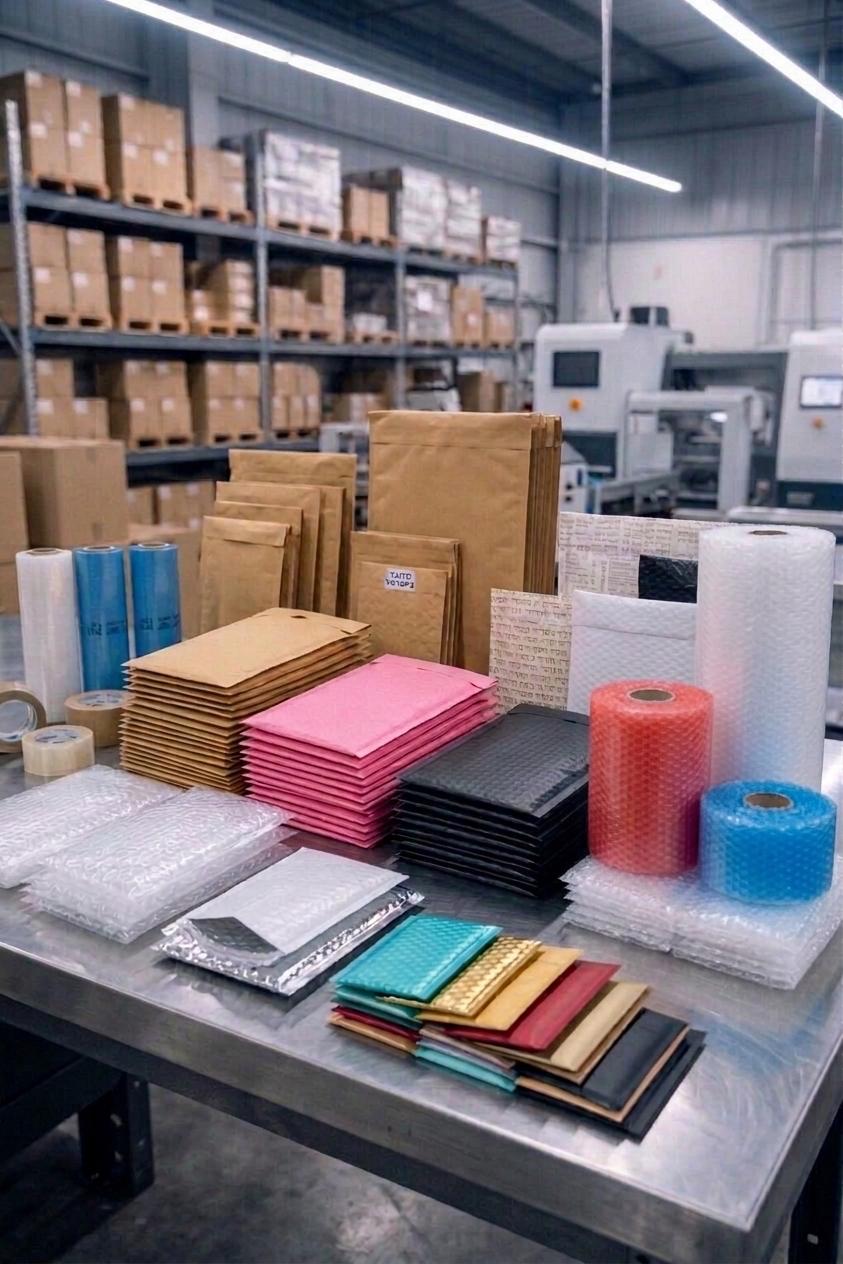
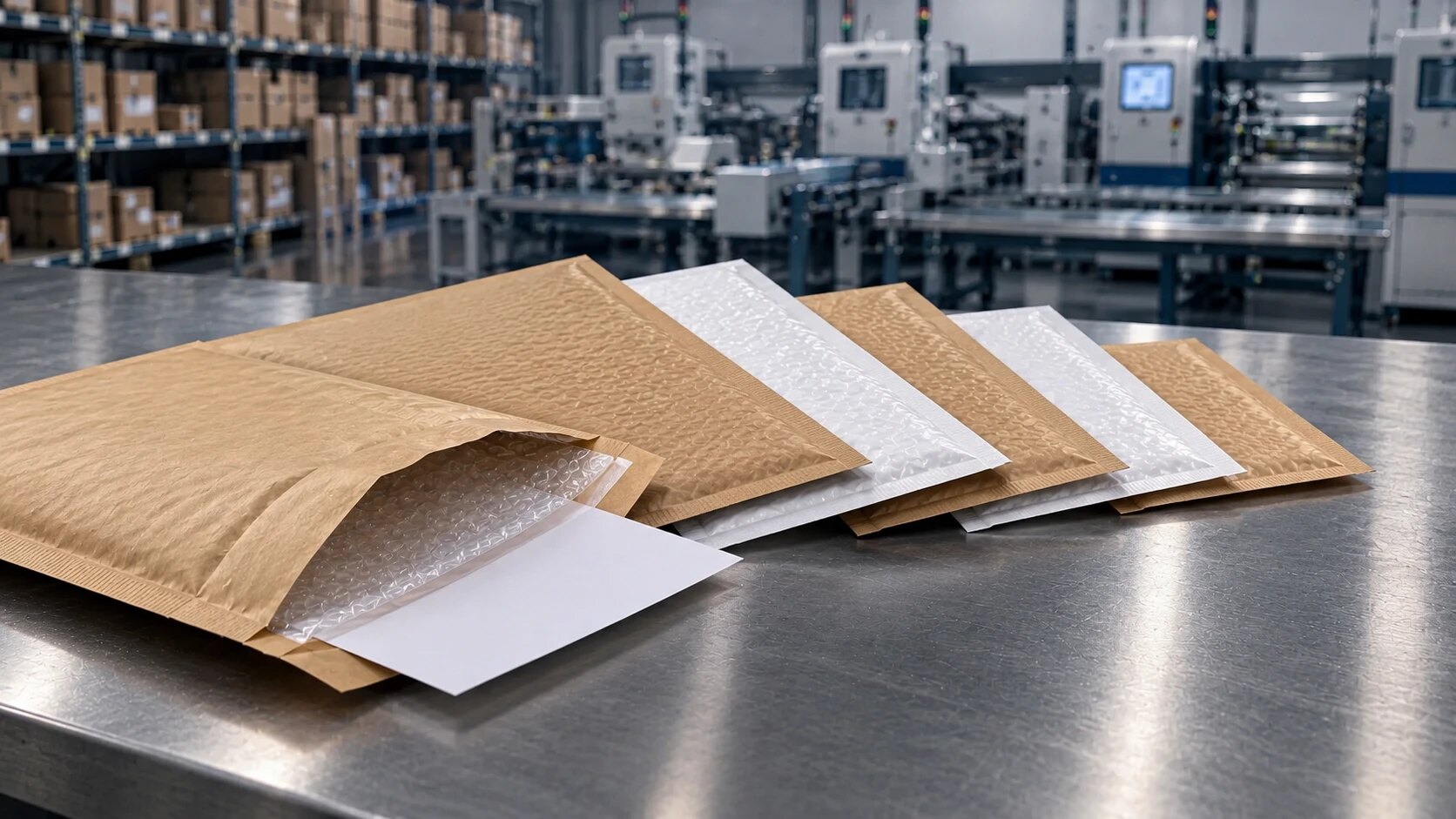
Padded envelopes with an inner bubble lining and a self-seal closure, in all ten sizes from A to K, and other sizes on request. Orders are in multiples of 100.