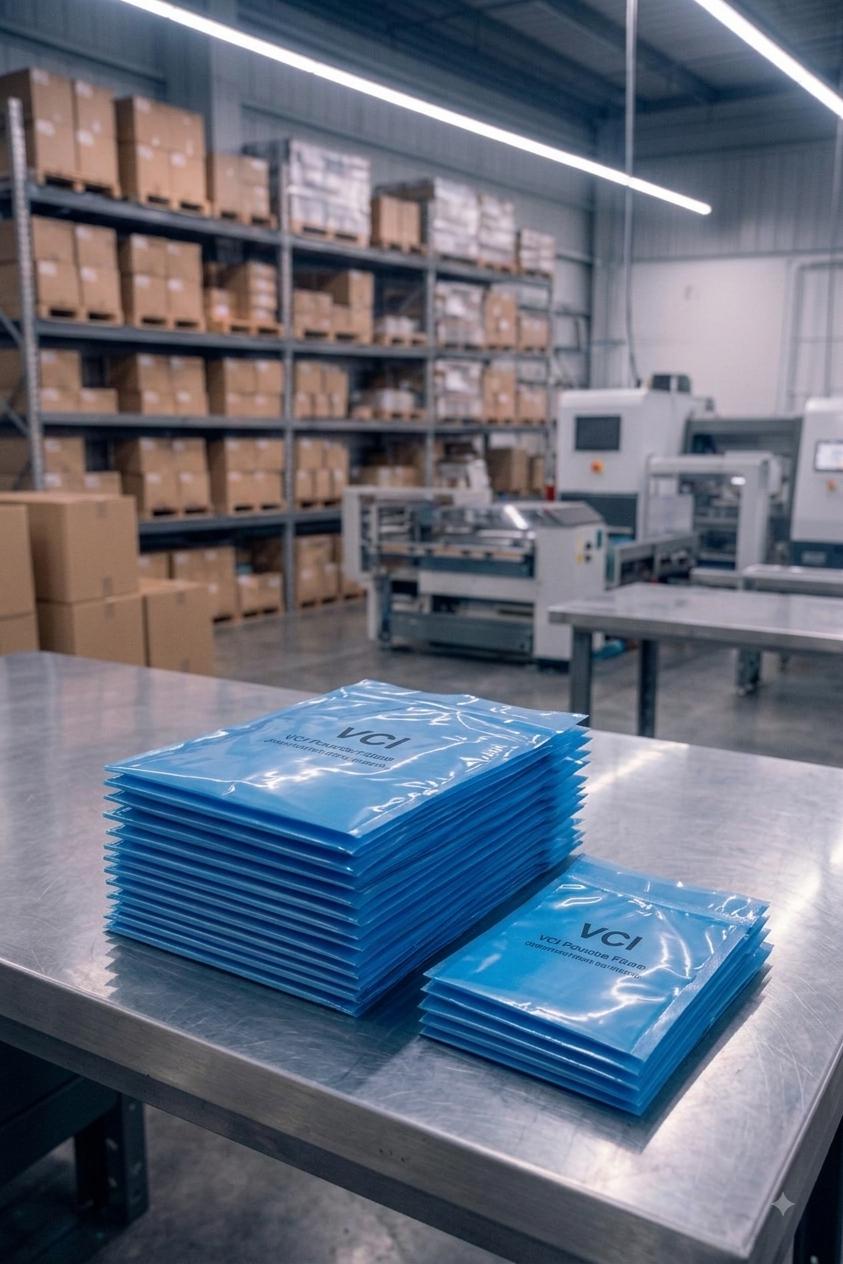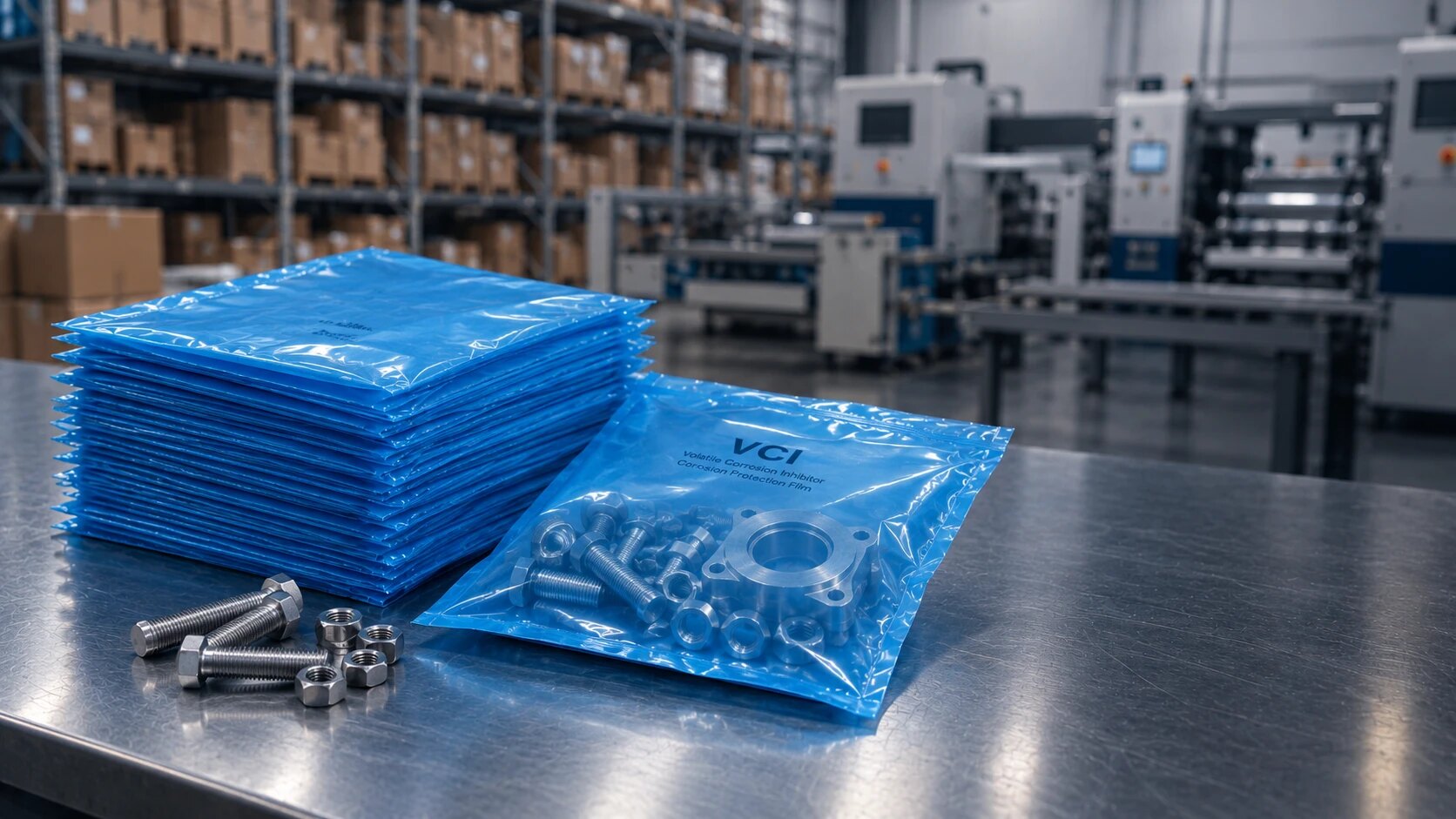
What VCI is
VCI (volatile corrosion inhibitor) is a material built into the plastic of the bag. In a closed bag it slowly evaporates, fills the air inside and settles on the metal in a very thin layer you cannot see. That layer slows the reaction that creates rust.
Because the material travels through the air, it also reaches holes, threads and inner parts, not only the places that touch the bag.
VCI or oil?
The traditional way to protect metal in storage is oil or grease. It works, but it has to be spread over the whole part, and the part arrives dirty. With a VCI bag the part stays dry. According to the manufacturers, once the part is out of the bag the layer evaporates and the part can be used right away, without cleaning.
| VCI bag | Oil or grease | |
|---|---|---|
| Preparation | Put it in and close the bag | Spread over the whole part |
| Before use | Take it out and use it | Clean the oil off |
| Holes and threads | Reached through the air in the bag | Only where it was spread |
| Once the package is open | Protection fades | The oil stays on the part |
Which metals
There are two main kinds of VCI: those made for iron and steel, and multi-metal ones that also suit, for example, aluminium, copper and brass. A bag that does not suit the metal will not protect it properly, so this is the first thing to check.
Our blue bags suit any metal that can rust or corrode: iron and steel, and also aluminium, copper and brass.
How long the protection lasts
As long as the bag stays closed and intact. It also depends on temperature, humidity and how often the bag is opened. According to the manufacturer of our bags, protection in a closed bag lasts 24 months or more.
When the bag is opened, the material evaporates and the metal is no longer protected. A zip bag can be closed again, and the material in the plastic keeps releasing into it.
How to pack it right
- A clean, dry part. Fingerprints, moisture and dirt weaken the protection. VCI is made to prevent rust, not to remove it: clean a rusty part first.
- A bag of the right size. As little air around the part as possible, and as little distance between the part and the bag wall.
- Close it well. The zip closed along its whole length. There is no need to draw the air out, but an open or torn bag does not protect.
- The part directly in the bag. If it is wrapped in ordinary plastic first, the material has a harder time reaching it.
- Mark the package, so whoever opens it knows it is VCI packaging and closes it again.
What we offer
Kpack has blue VCI bags with a zip closure, in 6 common sizes from 70×100 to 300×400 mm, and any other size on request. We send the manufacturer's documents on request.